
I have a client in the West Village who spent three months trying to decide.
She knew she wanted a built-in bookcase in her living room. She’d saved the photos, done the research, and spoken to two contractors. The problem wasn’t budget or style. The problem was one question she couldn’t resolve on her own: should the bookcase go floor to ceiling, or should it run wall to wall?
What she didn’t realize, and what most homeowners don’t, is that these aren’t competing options. They’re different decisions entirely. One governs the vertical dimension. The other governs the horizontal. And getting both right is what turns a wall of shelving into something that makes the room feel completely different.
Here’s how to think through both decisions and how to figure out which combination actually works for your specific NYC space.
Why This Decision Matters More in New York Than Anywhere Else
New York apartments put specific demands on built-in furniture that don’t exist in the same way anywhere else.
Square footage is limited, which means storage has to work harder. Ceilings in pre-war buildings throughout Brooklyn, Manhattan, and Queens are often 9 to 10 feet, creating vertical space that most freestanding furniture completely wastes. And because these apartments are lived in intensely, a bookcase isn’t just decoration. It’s a functional system that needs to perform every day.
A custom library bookcase in New York that accounts for these realities-the ceiling height, the wall width, and the architectural quirks of the specific building-delivers results that a standard piece of furniture simply cannot.
Floor-to-Ceiling Bookcases: What They Actually Do
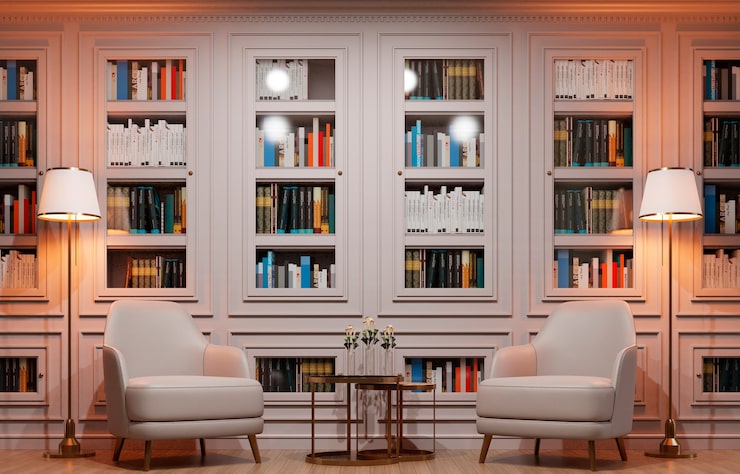
A floor-to-ceiling bookcase runs from the baseboard to the ceiling or to the crown molding if the room has it. No gap at the top. No visual interruption. Just a continuous vertical surface that reads as part of the room’s architecture rather than furniture placed inside it.
According to Epure Millwork’s 2026 NYC Millwork Cost Guide, floor-to-ceiling is almost always the right call for built-in bookcases for several reasons:
- It reads as architecture, not furniture: The bookcase integrates with the room rather than sitting in front of it
- It eliminates the dead zone: The awkward gap between a standard bookcase top and the ceiling that collects dust and visual noise
- It maximizes storage: In a 9-foot ceiling apartment, a floor-to-ceiling run adds 18 to 24 inches of storage that a standard 7-foot bookcase misses completely
- It makes the room feel taller: The vertical line draws the eye upward, creating perceived height beyond what the ceiling actually provides
- It adds architectural permanence: A well-designed library wall in painted or natural wood will look right for decades, unlike furniture trends
In NYC apartments specifically, the upper section of a built-in shelving Brooklyn or Manhattan build is typically used for:
- Oversized art books and rarely accessed reference volumes
- Seasonal display items that change throughout the year
- Archival boxes and storage that doesn’t need daily access
- Decorative objects and plants that add visual interest at height

Wall-to-Wall Bookcases: The Horizontal Story
A wall-to-wall bookcase runs the full width of the wall from corner to corner, or from architectural feature to architectural feature.
Where floor-to-ceiling governs the vertical story, wall-to-wall governs the horizontal. And in a New York apartment, running a bookcase across the full width of a wall is almost always the right call for similar reasons.
A wall-to-wall custom library bookcase in New York that fills the complete wall width:
- Eliminates the gaps on either side that make a narrower unit look placed rather than designed
- Creates a unified composition that reads as a single architectural element
- Uses every inch of horizontal wall space, which is critical in apartments where walls are at a premium
- Allows the bookcase to work around existing features like windows, doorways, radiators by incorporating them rather than stopping at them
The most impressive library walls in NYC apartments are almost always both floor-to-ceiling and wall-to-wall simultaneously. The combination is what creates the full architectural effect.
Wondering which configuration works for your specific wall and room dimensions? Contact YD Woodwork for a free consultation; we’ll assess your space and design a bookcase that fits perfectly.
The Honest Comparison: Which One to Prioritize First
Here’s the question most homeowners are actually trying to answer: If I can only go one direction first—vertical or horizontal—which matters more?
| Decision | Primary Benefit | Impact in NYC Apartments | Priority |
| Floor-to-Ceiling | Maximizes storage, reads as architecture, makes room feel taller | High pre-war ceilings create significant untapped vertical space | Start here |
| Wall-to-Wall | Eliminates visual gaps, creates unified composition | High narrow walls make gaps especially visible | Second priority |
| Both Combined | Full library wall effect, maximum storage, complete architectural integration | Highest defines the room and adds significant resale value | Best outcome |
| Partial Height | Lower cost, less visual impact | Lower gaps at top collect dust, reads as furniture not architecture | Only for specific constraints |
| Partial Width | Fits around obstacles | Moderate workable in layouts with unavoidable obstacles | When forced by layout |
What Each Configuration Costs in NYC (2026)
Understanding the realistic cost of a custom library bookcase in New York helps set expectations before any consultation.
According to current NYC millwork data for 2026:
- Simple single-bay floor-to-ceiling unit: $10,000 to $15,000 installed
- Full wall-to-wall, floor-to-ceiling library wall: $20,000 to $45,000 depending on width and complexity
- Full library with rolling ladder and integrated lighting: $45,000 to $80,000+
- Wall-to-wall bookcase wall with closed lower cabinets: $15,000 to $35,000
These are significant investments. They’re also investments that consistently add to the perceived value and actual resale value of NYC apartments. Custom bookshelves in NYC apartments are regularly cited as selling points in listing descriptions on StreetEasy and CityRealty.
The Configurations That Work Best in NYC Apartments
Different apartment types call for different approaches to custom shelving in NYC. Here’s what works best in each:
Pre-war apartment with 9–10 foot ceilings (Brooklyn brownstone, Manhattan co-op): Floor-to-ceiling is essential; the ceiling height is the feature, and a bookcase that doesn’t reach it wastes the room’s best architectural asset. Wall-to-wall depends on the wall’s relationship to windows and doors.
Studio or one-bedroom with shared living/sleeping space: A wall-to-wall bookcase can serve double duty as a visual room divider, separating the living zone from the sleeping area without requiring a permanent wall. This is one of the most-requested configurations in built-in shelving for Brooklyn apartments in 2026, particularly for homeowners who also need a defined workspace.
Larger pre-war or new construction with a dedicated library room: with a full library wall floor-to-ceiling and wall-to-wall with integrated closed lower cabinets, a rolling ladder if ceiling height allows, and integrated LED lighting for evening ambiance.
Narrow galley living room or hallway: Shallow floor-to-ceiling shelving as shallow as 8 to 10 inches uses vertical space without consuming the floor area that a standard 12-inch-deep bookcase would require.

Built-In vs. Freestanding: The Question Behind the Question
Here’s something worth addressing directly, because many NYC homeowners are still weighing this when they start thinking about bookcases.
Freestanding bookcases are moveable, accessible without a renovation, and significantly cheaper upfront. For a rental apartment or a short-term living situation, they make genuine sense.
Built-in bookcases, whether floor-to-ceiling, wall-to-wall, or both, are a different product entirely. They become part of the apartment. They add to its value. They use the space in a way no freestanding piece can replicate. And in a city where every square foot carries real value, the investment in a wall-to-wall bookcase in New York that’s been designed for the specific room consistently delivers a return that a freestanding unit cannot.
At YD Woodwork, we’ve been designing and building custom library bookcases across New York for over 30 years, from single-bay reading nooks in Upper West Side co-ops to full-room library walls in Brooklyn brownstones. Every project starts with the same question: what does this specific room actually need?
The Decision Framework in Three Questions
If you’re still weighing the options, these three questions cut through the noise:
1. What is your ceiling height?
If it’s 9 feet or above, floor-to-ceiling is almost always the right call; the visual and storage benefit is too significant to leave on the table.
2. What is your wall width?
If the wall runs more than 8 feet without an architectural interruption, wall-to-wall is worth pursuing; partial-width bookcases on long walls always look like they ran out of budget.
3. How long are you staying?
If this is your home for 10 or more years, invest in the full configuration. If you’re renovating to sell in 2 to 3 years, a well-executed floor-to-ceiling library wall is one of the strongest single-room investments in NYC real estate.
View our gallery to see real floor-to-ceiling and wall-to-wall bookcase installations across Brooklyn, Manhattan, and the wider New York area. Then contact YD Woodwork for a free design consultation, and let’s figure out exactly what your room needs.
FAQs
Q1: What is the difference between a floor-to-ceiling and wall-to-wall bookcase?
A floor-to-ceiling bookcase runs vertically from the floor to the ceiling with no gap at the top. A wall-to-wall bookcase runs horizontally across the full width of a wall from corner to corner or between architectural features. They address different dimensions of the same wall. The most impressive and functional library installations in NYC apartments are typically both floor-to-ceiling and wall-to-wall simultaneously.
Q2: How much does a custom library bookcase cost in New York in 2026?
Custom library bookcases in New York range from $10,000 for a simple single-bay floor-to-ceiling unit to $80,000 or more for a full-room library wall with an integrated rolling ladder, lighting, and closed lower cabinets. A standard full wall-to-wall, floor-to-ceiling built-in across a living room wall typically lands between $20,000 and $45,000 installed, depending on width, materials, and complexity.
Q3: Should I choose floor-to-ceiling or partial-height bookcases for a small NYC apartment?
Floor-to-ceiling is almost always the better choice in a small NYC apartment, especially in pre-war buildings with 9 to 10 foot ceilings. The vertical run makes the room feel taller and maximizes storage without consuming additional floor space. Partial-height bookcases in small rooms create a visual gap at the top that actually makes the room feel smaller rather than creating the open, airy effect homeowners often expect.
Q4: Can a wall-to-wall bookcase work as a room divider in a NYC studio apartment? Yes and it’s one of the most-requested configurations for NYC studio apartments in 2026. A wall-to-wall bookcase placed perpendicular to the long wall can serve as both a storage unit and a visual boundary between living and sleeping zones without requiring a permanent wall. Open on both sides or closed on one, it creates spatial definition while remaining accessible from both areas of the apartment.
Q5: How long does it take to design and install a custom bookcase in a New York apartment?
Most custom library bookcase projects in New York take four to eight weeks from design approval to completed installation. The design and material selection phase takes one to two weeks. In-house production in the workshop takes three to five weeks depending on complexity. On-site installation typically takes one to two days. Building board approvals in co-ops and condos may add additional time before work can begin.
Q6: Do custom built-in bookcases add value to a NYC apartment?
Yes, consistently. Custom built-in bookcases are regularly cited as selling points in NYC apartment listings on StreetEasy and CityRealty. Buyers respond positively because built-ins add storage, character, and architectural quality that is difficult to replicate after purchase. A well-designed library wall typically returns 50 to 70% of its installation cost at resale and measurably improves the perceived quality and appeal of the apartment.


